

Other materials
3D Printing、MIM、HIP、Brazing、Spraying、Porous material、PM
BAg30CuZnSn silver-copper-zinc-tin alloy powder
Low melting point · High wettability · Tin-containing silver-based solder alloy -300 mesh, for brazing use only
★ Recommended particle size: -300 mesh (D50 35–48 μm) — Specifically for brazing pastes, readily available in stock.
Core Product Advantages
Low melting point · Energy-saving and highly efficient
Solidus: 665°C; liquidus: 755°C. The brazing temperature range is 620–750°C, which is approximately 40–80°C lower than that of conventional silver-based brazing alloys, effectively reducing the risk of overheating and burn‑in of the base materials.
Economy · Great value
With a silver content of approximately 30%, this alloy incorporates tin to enhance brazing performance while keeping costs under control, making it particularly well-suited for mass production and the brazing of large‑size workpieces.
Excellent wetting · Strong grouting
The Sn element effectively reduces surface tension, exhibits excellent fluidity, can fill complex weld seams, produces well‑filled brazing angles, ensures strong bonding, and achieves an appearance color that matches stainless steel.
Corrosion-resistant · Long service life
Resistant to water vapor and mild acidic–alkaline environments, it extends the service life of components and meets the long-term operating requirements of applications such as refrigeration, bathroom fixtures, and power systems.
Product Real-World Photos & Microscopic Morphology
 High-sphericity -300 mesh powder
Vacuum atomized spherical powder, with a sphericity of ≥90%, a normal particle size distribution, minimal satellite particles, and stable flowability in brazing pastes.
 Vacuum-packed · Batch traceability
Packaged in multiple formats, including aluminum foil bags with seals, iron drums, and plastic buckets, with a Certificate of Analysis (COA) and particle size report included with each batch.
 Typical brazed joint
Copper–copper induction brazing yields a full, dense brazed joint with no porosity or cracks.
BAg30CuZnSn silver-copper-zinc-tin powder
BAg30CuZnSn is a tin‑based silver brazing alloy that, through strategic alloying with tin, significantly lowers the melting point and enhances wetting and spreading characteristics. This product is suitable for furnace brazing, induction brazing, and flame brazing of copper and copper alloys, as well as steel and stainless steel, yielding brazed joints with excellent mechanical properties and superior corrosion resistance. The powder is produced via vacuum atomization, featuring low oxygen content (≤600 ppm) and excellent flowability, making it particularly well suited for preparing brazing pastes and preformed brazing foils.
Each batch is accompanied by a Certificate of Analysis (COA), with particle size control and customizable specifications.
Chemical Composition (wt%, in accordance with AWS A5.8 / TIJO internal control)
| Element | Ag | Cu | Zn | Sn | Cadmium | Yes | O (oxygen content) |
|---|---|---|---|---|---|---|---|
| AWS A5.8 Standard Value | 29~31 | 35~37 | 30~34 | 1.5~2.5 | ≤0.01 | ≤0.05 | — |
| TIJO Typical Value | 30.0±0.3 | 36.0±0.5 | 31.5±1.0 | 2.0±0.2 | ≤0.01 | ≤0.05 | ≤0.06 |
* Standard values are based on AWS A5.8 / BAg-30. TIJO products strictly control oxygen content to ensure low-splash brazing performance. Tin content can be finely adjusted within the 1.5–2.5% range according to customer requirements.
Melting characteristics
| Parameter | Value (°C) | Technological significance |
|---|---|---|
| Solidus | 665 | The temperature at which the brazing filler metal begins to melt; below this temperature, the filler metal remains solid. |
| Liquidus line | 755 | The temperature at which the brazing filler metal is completely melted; once this temperature is reached, the filler metal can flow freely. |
| Recommended brazing temperature | 760 ~ 820 | Within this temperature range, the brazing filler metal exhibits optimal fluidity, achieves thorough wetting, and prevents overheating of the base material. |
| Melting range | ~90 | A wider application area facilitates the filling of uneven gaps and accommodates on-site operations. |
| Parameter item | Value/Condition | The significance of brazing |
|---|---|---|
| Solidus/liquidus | Approximately 665°C / Approximately 755°C | With a relatively low melting point, it is suitable for brazing copper alloys and stainless steels, minimizing the heat-affected zone. |
| Density (alloy) | Approximately 8.9 g/cm³ | High tapped density, stable sedimentation of the paste, and high powder utilization. |
| Powder bulk density | ≥4.8 g/cm³ | Excellent fluidity, suitable for automated dispensing and screen-printing processes. |
| Hall flow rate (-300 mesh) | ≤25 s/50g | The friction between powder particles is low, ensuring smooth conveying. |
| Electrical conductivity | ~25% IACS | Meets general electrical connection and grounding component requirements. |
Particle size specification: -300 mesh, for brazing applications only.
| Particle size specification | Corresponding mesh count | D10 (μm) | D50 (μm) | D90 (μm) | Loose packing density (g/cm³) | Flowability (s/50g) | Typical process |
|---|---|---|---|---|---|---|---|
| ★ -300 mesh | ≤48μm | ≥12 | 35~48 | ≤70 | ≥4.8 | ≤25 | Brazing paste · Brazing powder |
* -300 mesh is the standard stock particle size; other sizes are available upon request. Bulk density and flowability data are based on tests conducted using a Hall flow meter.
BAg30CuZnSn – 300-mesh brazing process reference
| Base material combination | Recommended Brazing Temperature (°C) | Recommended flux/atmosphere | Joint Performance Characteristics |
|---|---|---|---|
| Red copper–red copper | 770~800 | FB102 / CJ301 | Excellent fluidity, with a small wetting angle. |
| Brass-steel | 780~820 | FB102 / Gas Flux | Excellent wettability on brass, with a dense brazed joint. |
| Carbon steel - carbon steel | 790~830 | Borax-type flux | Strong seam-filling capability and high joint strength. |
| Stainless steel–copper | 800~850 | FB102 + Reducing Atmosphere | Avoid stainless steel sensitization; ensure strong bonding. |
* We recommend a flux specifically designed for silver brazing (with low fluoride content and reduced reactivity). For vacuum brazing, we suggest using a low‑dew‑point protective atmosphere.
An upgraded solution to replace cadmium-containing silver brazing alloys
| Comparison item | BAg30CuZnSn (Cd-free) | Traditional cadmium-containing silver brazing alloy |
|---|---|---|
| Environmental Compliance | ✓ RoHS compliant, globally applicable | ✗ Contains restricted Cd; export prohibited. |
| Melting temperature | 665~755℃ | 610~700℃ |
| Wettability | Excellent (Sn improvement) | Excellent |
| Joint strength | Excellent | Excellent |
| Cost | Moderate | Moderately high |
BAg30CuZnSn is currently the primary environmentally friendly alternative to cadmium‑containing silver brazing alloys, widely used in the export‑oriented refrigeration and home appliance industries.
Typical application areas
 Refrigeration industry
Air conditioner and refrigerator piping, condenser, and evaporator welding
 Power equipment
Wire terminals, switch contacts, busbar connections
 Hardware manufacturing
Copper fittings, valves, radiators, plumbing and bathroom fixtures
 Home appliance industry
Gas appliances, water heater components, microwave waveguides
 Motor instrument
Motor commutator, sensor housing, connector
 Automotive parts
Brazing of heat exchangers, oil coolers, and pipeline fittings
End-to-end testing capability
Each batch of –300 mesh BAg30CuZnSn powder is tested for particle size, oxygen content, chemical composition, flowability, and tapped density to ensure consistent welding quality for our customers. RoHS compliance reports are available upon request.
Packaging & Delivery
- Packaging Specifications – Vacuum-sealed in aluminum foil bags, then packed in iron drums, plastic drums, or woven bags, available in 5 kg, 20 kg, 50 kg, and other sizes.
- Delivery time – Standard particle sizes are in ample stock; shipment within 3–7 days upon order confirmation.
- Batch Traceability – A sample is retained for each production batch, and a Certificate of Analysis (COA) is provided with the shipment.
- Sample Policy – Provide authentic batch samples for customers’ brazing paste formulation and process validation.
- Technical Support – From powder to solder paste formulation recommendations and brazing temperature consulting, we lower the barrier to entry for users’ development efforts.
- Export Compliance – The product complies with RoHS.
Inquire Now for Free Samples
Fill out the form on the right or contact us directly; we will provide product samples, technical data sheets, and price quotes to help you quickly complete your additive manufacturing process validation.
Address: No.39, Liandong Yougu lnd. Park, Bachelor Street,Changsha City,Hunan Province, China.
Recommend products

Ternary eutectic solder, low temperature, good fluidity and process performance, will form brittle intermetallic compounds at the weld, cannot be used to connect ferrous metals, nickel-based alloys or nickel-copper alloys containing more than 10% nickel
View Details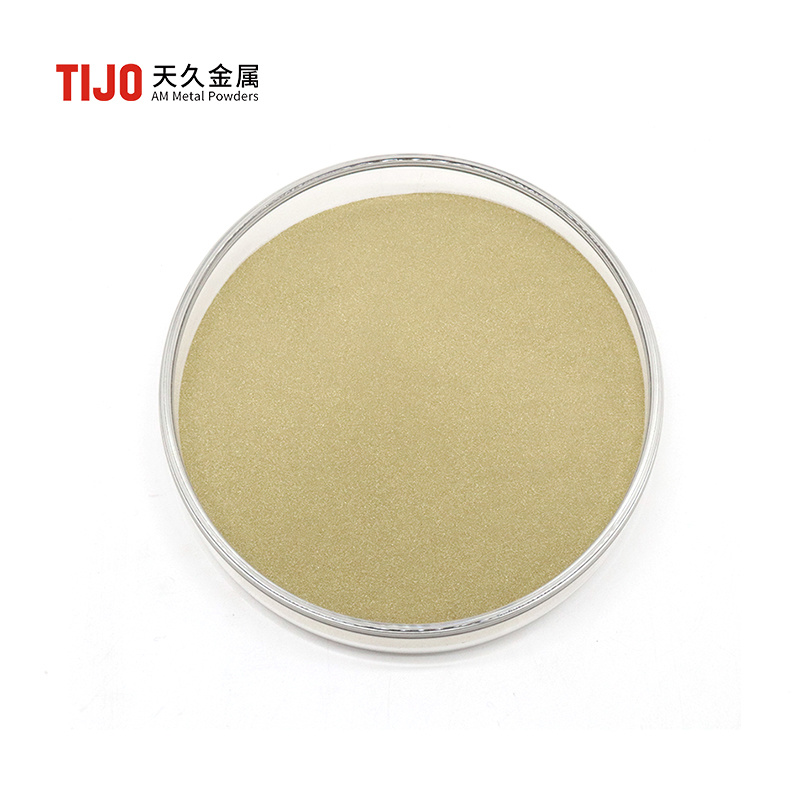
Excellent process performance, moderate melting point, good wetting performance and gap filling performance, excellent strength, plasticity, conductivity, corrosion resistance and other properties
View Details
Gas atomization process, spherical powder, low oxygen content, particle size controllable, low density
View Details
Maybe you want to know something else.
Contact Us

Address: No.39, Liandong Yougu lnd. Park, Bachelor Street,Changsha City,Hunan Province, China.