
Iron-based
Iron-based powder is a raw material of alloy powder with iron as the main component, which is widely used in the fields of mechanical parts, 3C products, porous materials, tooling materials, magnetic materials, shielding materials, surface coatings, etc., and it is the raw material of powder metallurgy with a large dosage, and it has a high cost performance ratio.
17-4PH stainless steel powder
Features:
Precision grinding, intelligent manufacturing technology, integrated solutions
Application:
MIM (metal injection molding)
HIP (heat and other static pressure)
PM (powder metallurgy)
Packing:
Precision grinding, intelligent manufacturing technology, integrated solutions
Aluminum foil bag, iron drum, plastic drum, woven bag, pallet, customized packaging
Date of delivery:
Precision grinding, intelligent manufacturing technology, integrated solutions
3-15 days
key word:
17-4PH precipitation-hardening stainless steel powder
Ultra-high strength · Exceptional corrosion resistance · Specifically designed for additive manufacturing
Process Advantages
Ultra-high strength
After aging treatment, the tensile strength is ≥1310 MPa, the hardness is ≥40 HRC, and the impact toughness is excellent.
Excellent corrosion resistance
It exhibits excellent resistance to atmospheric, seawater, and weak acidic environments, with corrosion resistance comparable to that of 304 stainless steel.
High sphericity ≥90%
Vacuum atomization technology delivers excellent sphericity, with minimal satellite particles, and ensures uniform, dense powder spreading.
Granularity customization
15–45 μm / 15–53 μm / 53–150 μm, compatible with printers of all brands.
Microscopic Morphology & Product Applications

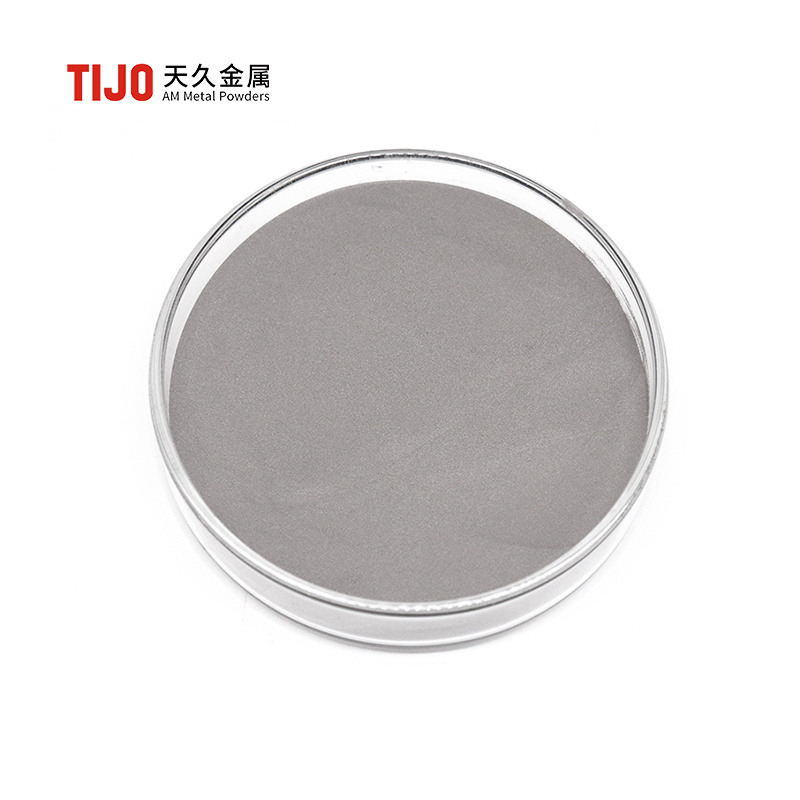
17-4PH powder image
Sphericity ≥ 95%, minimal satellite particles, narrow particle size distribution, perfectly suited for SLM processes.

3D-printed products & surgical instruments
For use in the medical device field

Powder electron micrograph
15–53 μm
Batch traceability, with support for third-party testing.
17-4PH Precipitation-Hardening Stainless Steel: The Perfect Combination of Strength and Corrosion Resistance
17-4PH is a martensitic precipitation‑hardening stainless steel that achieves age hardening through the addition of copper (Cu) and niobium (Nb), attaining ultra‑high strength while maintaining excellent corrosion resistance. After age treatment, it exhibits a tensile strength of ≥1310 MPa and a hardness of ≥40 HRC, with corrosion resistance comparable to that of 304 stainless steel. It is widely used in aerospace, petrochemicals, medical devices, and industrial tooling, among other fields.
Typical Chemical Composition (wt%)
| element | Cr | Ni | Cu | Note | C | Yes | Mn | P | S | Fe |
|---|---|---|---|---|---|---|---|---|---|---|
| Standard value | 15.0-17.5 | 3.0-5.0 | 3.0-5.0 | 0.15-0.45 | ≤0.07 | ≤1.0 | ≤1.0 | ≤0.04 | ≤0.03 | Margin |
| Typical measured values | 16.0-16.8 | 3.8-4.5 | 3.5-4.2 | 0.20-0.35 | 0.025 | 0.45 | 0.50 | 0.020 | 0.008 | Bal. |
Oxygen content ≤0.10% | Nitrogen ≤0.06% | Hydrogen ≤5 ppm, meeting the requirements for high‑quality printing.
Powder Physical Properties & Particle Size Distribution
| Particle size specification (μm) | D10 (μm) | D50 (μm) | D90 (μm) | Tap Density (g/cm³) | Loose packing density (g/cm³) | Hall flow rate (s/50g) | Oxygen content (ppm) |
|---|---|---|---|---|---|---|---|
| -800mesh | 3.2-4.6 | 9-11 | 15-19 | 4.4-4.8 | ≥2.4 | NA | ≤0.10 |
| -500mesh | 4-6 | 12-14 | 21-25 | 4.5-4.8 | ≥2.4 | NA | ≤0.08 |
| -400mesh | 4-6.5 | 14.5-17.5 | 28-36 | 4.6-4.9 | ≥2.8 | NA | ≤0.08 |
| 15–53 μm | 17-23 | 30-35 | 50-58 | 4.4-4.9 | ≥3.9 | ≤25 | ≤0.05 |
| 15–45 μm | 16-20 | 27-32 | 47-51 | 4.4-4.9 | ≥3.9 | ≤25 | ≤0.05 |
| 53-150 μm | 53-66 | 90-102 | 138-160 | 4.5-4.8 | ≥3.9 | ≤25 | ≤0.05 |
* The above data is for reference only.
End-to-end testing capability
Each batch of powder undergoes comprehensive inspection for chemical composition, particle size distribution, sphericity, flowability, and tapped density, with a complete Certificate of Analysis (COA) provided to ensure the powder meets aerospace, medical, and nuclear‑grade quality requirements.
Typical application scenarios
 Aerospace
Aircraft engine mounts, landing gear components, high-strength fasteners, missile components
 Petrochemicals
Valves, pump bodies, corrosion-resistant piping systems, and chemical equipment components
 Automotive industry
Turbine compressor impeller, chassis structural components, high-strength fasteners
 Medical device
Surgical instruments, orthopedic implants (requiring biocompatibility certification), dental instruments
 Industrial mold
Precision injection molds, wear-resistant tooling fixtures, and hot-work die components
 Turbine components
Turbine blades, shafts, and high-temperature, high-load rotating components
 Marine Engineering
Marine‑corrosion‑resistant structural components, pump and valve parts, propellers
 3C electronics
Precision hinges, drone frames, heat-dissipating enclosures
Key Advantages of Choosing TIJO 17-4PH Stainless Steel Powder
- Ultra-high strength grade – After aging treatment, the tensile strength is ≥1310 MPa, and the hardness is ≥40 HRC, meeting the requirements of high‑load applications.
- Scaled and stable supply – Four automated atomization production lines with a monthly capacity exceeding 200 tons, meeting the demands of large-scale continuous production.
- Full-inspection traceability system – ISO 9001:2015 certified; particle size, composition, and flowability reports are provided with each batch.
- Free sample response – Rapid provision of verification samples to reduce customers’ selection risks.
- Particle size customization / blend ratio mixing – Optimize the particle size distribution for different printers to enhance printing density.
- Provide technical support – Assist customers with process development.





Chemical composition(wt%)
|
Grade |
Chemical composition ( wt% ) |
|||||||||
|
Cr |
Ni |
Cu |
Note |
Other > |
Fe |
|||||
|
C |
Yes |
Mn |
P |
S |
||||||
|
17-4PH |
15.0-17.5 |
3.0-5.0 |
3.0-5.0 |
0.15-0.45 |
0.07 |
1.0 |
1.0 |
0.04 |
0.03 |
Bal. |
Physical indicators
Powder specifications | Tap density ( g/cm³ ) | Hall velocity ( s/50g ) | Oxygen content ( ppm ) | Particle size distribution ( micrometer ) | ||
D10 | D50 | D90 | ||||
53-150 μm | 4.5-4.8 | ≤25 | 300-500 | 56-66 | 90-102 | 1 35-155 |
15–45 μm | 4.4-4.8 | ≤25 | 300-500 | 16-20 | 27-32 | 47-51 |
15–53 μm | 4.4-4.9 | ≤25 | 300-500 | 17-22 | 30-34 | 48-55 |
20- 6 0 μm | 4.3-4.9 | ≤25 | 300-500 | 20-25 | 32-37 | 51-61 |
-500mesh | 4.5-4.8 | / | 500-1000 | 3.5-4.5 | 11.5-12.5 | 22-26 |
Application areas

Aerospace
High -strength, can endure extreme environments, and also has good corrosion resistance and fatigue life. It is used to manufacture aircraft engine parts, missile components, satellite structures and other parts.
Chemical Processing
It has good corrosion resistance to liquid and gas for chemicals and is used to make equipment such as containers, pipelines, and valves.
Auto Industry
High strength is good for improving the safety and reliability for the car.
Petroleum and Natural Gas Mining
Can endure high pressure, high temperature, and high corrosion environment.
Medical Instruments
Good bio-compatibility, and can resist various forms of corrosion.
Steam Turbine Blades and Axis
Martensite precipitation hardening stainless steel with high yield strength and fatigue strength as well as good corrosion resistance and process performance.
Recommend products
1. Exceptional Corrosion Resistance: The high molybdenum (Mo) content enhances resistance to pitting and crevice corrosion, making it ideal for harsh environments such as marine and chemical industries. 2. Biocompatibility: Certified under ISO 10993 for biological safety, suitable for manufacturing medical devices and implantable human devices. 3. High Purity with Low Impurities: Oxygen content ≤ 0.1%, carbon content ≤ 0.03%, reducing printing defects and ensuring the density and strength of finished products. 4. Excellent Processability: High sphericity (90–95%) and excellent flowability (Hall flow rate ≤ 25 s/50g), making it well-suited for additive manufacturing processes such as SLM and EBM.
View Details
1. Corrosion Resistance: Resistant to corrosion by weak acids, alkalis, chlorides, and organic media; exhibits superior resistance to intergranular corrosion compared to 304 stainless steel. Excellent oxidation resistance, making it suitable for humid, high‑temperature steam environments. 2. Processability: High sphericity (≥95%) and low oxygen content (≤0.1%), ensuring excellent flowability and minimizing additive manufacturing defects. Outstanding weldability—no post‑weld annealing is required, and there is no tendency toward hot cracking. 3. Environmental and Hygienic Safety: Lead‑free and cadmium‑free, compliant with FDA and RoHS standards, and suitable for food‑contact applications.
View Details
1. Ultra-high strength: After aging treatment, tensile strength ≥ 1900 MPa and hardness ≥ 50 HRC, making it suitable for high-load applications. 2. Excellent machinability: High sphericity (≥95%) and low oxygen content (≤0.1%), ideal for 3D printing and the fabrication of complex geometries. 3. Superior high-temperature resistance: Outstanding thermal stability, suitable for hot-work die components and parts operating in high-temperature environments. 4. Heat-treatment friendly: Can be rapidly strengthened through aging at 480–500°C, enhancing its mechanical properties.
View Details
AlSi10Mg aluminum alloy powder
1. Exhibits excellent ductility in the annealed condition 2. Outstanding weldability 3. High fatigue strength 4. Excellent corrosion resistance 5. Superior printability and surface finish 6. Good thermal and electrical conductivity, non-magnetic, and resistant to low temperatures 7. Non-magnetic
View DetailsMaybe you want to know something else.
Contact Us
Address: No.39, Liandong Yougu lnd. Park, Bachelor Street,Changsha City,Hunan Province, China.