
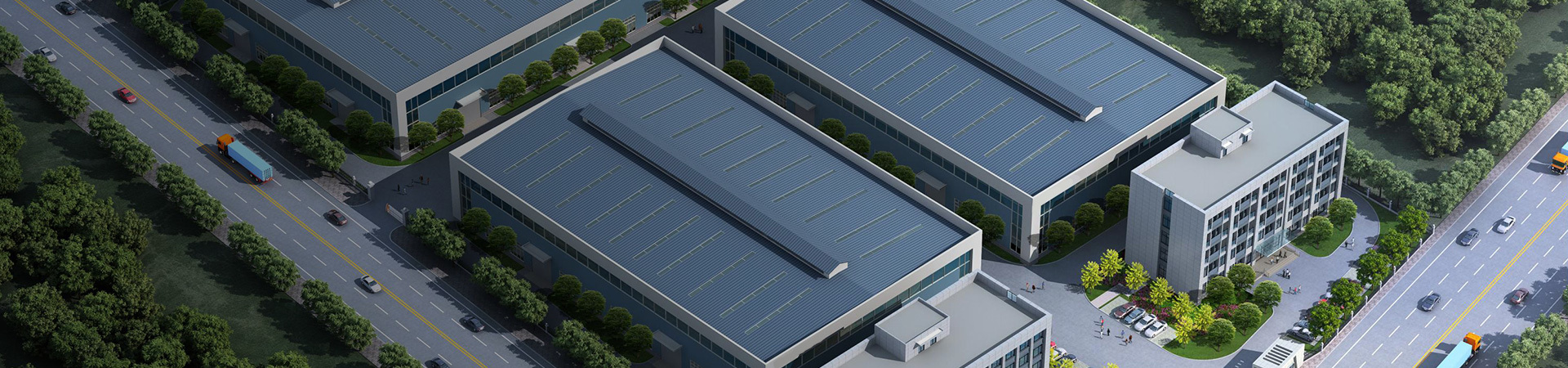
About Us
A new material enterprise focusing on new product development, large-scale production, metal powders sales and application terminal support of gas atomization powder manufacturing process technology.
Brazing
Core Introduction to Brazing Materials
Brazing filler metal is the core filling material in a brazed joint, and its properties directly determine the quality of the weld. Tianjiu brazing fillers all possess Compatible with melting point, excellent wettability, and filling capability It can achieve full mutual diffusion with the base material while exhibiting superior mechanical properties and excellent corrosion- and high-temperature-resistant physicochemical characteristics, thereby perfectly meeting the performance requirements of various welding applications.
Brazing alloys are classified into two main categories based on their melting point:
- Brazing alloy : Melting point ≥ 450°C; available in copper-based, silver-based, nickel-based, and aluminum-based alloy series, suitable for welding under high-strength and demanding service conditions.
- Soft solder : Melting point < 450°C; primarily based on tin-based alloys; soldering temperature 200–400°C; widely used in electronics, precision instruments, and other fields.
Copper-based brazing alloy
Key features: Based on a copper matrix, with additions of phosphorus, silver, zinc, tin, manganese, nickel, cobalt, titanium, and other elements to optimize melting point and overall performance; exhibits excellent electrical and thermal conductivity, high strength, and superior corrosion resistance; suitable for brazing to copper and copper alloys, carbon steel, cast iron, stainless steel, high-temperature alloys, and cemented carbides.
| GB/AWS | Main ingredients (wt%) | Solid–liquid phase (°C) | Brazing temperature (°C) |
|---|---|---|---|
| BCu100/BCu-1 | Cu≥99.9 | 1083 | 1093–1149 |
| CuSn10 | Sn9-11/Cu BAL. | 840-1000 | 1020-1090 |
| CuSn19Ti10 | Sn18-20/Ti9-11/Cu BAL. | 850-880 | 880-930 |
| BCuP-2/BCu92P | P7.0-8.1/Cu BAL. | 710-770 | 720-843 |
| CuSn3P7 | P6-8/Sn2-4/Cu BAL. | 630-670 | 710-810 |
| BCuP-9/BCu86SnP | P6-7/Sn6-7/Cu BAL. | 650-700 | 700-810 |
| BCuP-8/BCu76AgP | Ag17.2-18/P6-6.7/Cu BAL. | 643-666 | 670-686 |
| BCu86SnPNi | P4.8-6.5/Sn7-8/Ni0.5-1.5/Cu BAL. | 612-682 | 682-812 |
| CuSn15.6PNi4.2 | P5.2/Sn15.6/Ni4.2/Cu BAL. | 585-605 | 605-800 |
| Cu595/BCu84NiMn | Mn11-13/Ni2-4/Cu BAL. | 970-990 | 1000-1050 |
| CuSn15 | Cu BAL./Sn 14.5–15.5 | - | - |
| CuSn20 | Cu BAL./Sn 19.5–20.5 | 800-915 | 830-980 |
| CuMn38Ni10 | Mn37-39/Ni9-11/Cu BAL. | 900-950 | 950-1070 |
| BCuMnCo | Mn9-11/Co2-4/Cu BAL. | 980-1030 | 1050-1100 |
| BCu54Zn | Cu53-55/Zn BAL. | 885-888 | 910-955 |
| Cu773/BCu48ZnNi | Cu46-50/Ni9-11/Zn BAL. | 890-920 | 938-982 |
| Cu55ZnNiMn | Cu54-56/Ni6-8/Mn4-6/Zn BAL. | 910-933 | 940-1040 |
Nickel-based brazing alloy
Key features: Based on a nickel matrix, with additions of chromium, boron, silicon, phosphorus, and other elements to lower the melting point and enhance thermal strength; exhibits excellent high-temperature resistance and corrosion resistance, superior mechanical properties, and is suitable for brazing to stainless steel, high-temperature alloys, iron-based alloys, diamond, cemented carbides, C/C composites, and more.
| GB/AWS | Main ingredients (wt%) | Solid–liquid phase (°C) | Brazing temperature (°C) |
|---|---|---|---|
| BNi73CrFeSiB(c)/BNi-1 | Cr13-15/Si4-5/Fe4-5/B2.75-3.5/C0.6-0.9/Ni BAL | 980-1060 | 1066–1204 |
| BNi74CrFeSiB/BNi-1a | Cr13-15/Si4-5/Fe4-5/B2.75-3.5/C0.06/Ni BAL. | 980-1070 | - |
| BNi82CrSiBFe/BNi-2 | Cr6-8/Si4-5/Fe2.5-3.5/B2.75-3.5/Ni BAL. | 970-1000 | 1010-1177 |
| BNi92SiB/BNi-3 | Si 2.75–3.5 / B 4.0–5.0 / Ni BAL. | 980-1040 | 1010-1177 |
| BNi95SiB/BNi-4 | Si3-4/B1.5-2.2/Fe≤1.5/Ni BAL. | 980-1070 | 1010-1177 |
| BNi71CrSi/BNi-5 | Cr18.5-19.5/Si9.75-10.5/Ni BAL. | 1080-1135 | 1149–1204 |
| BNi-5x | Cr 28.5–29.5 / Si 3.5–4.5 / P 5.5–6.5 / Ni BAL. | 965-1035 | 1050-1125 |
| BNi89P/BNi-6 | P10-12/Ni BAL. | 875 | 927–1093 |
| BNi76CrP/BNi-7 | Cr13-15/P9.7-10.5/Ni BAL. | 890 | 927–1093 |
| BCo-1 | Ni 16–18/Cr 18–20/Si 7.5–8.5/W 3.5–4.5/B 0.7–0.9/C 0.35–0.45/Co BAL. | 1121-1149 | 1149-1232 |
Silver-based brazing alloy
Key features: Based on silver or silver-based solid solutions, it exhibits a low melting point, excellent wettability and gap-filling capability, as well as outstanding strength, ductility, electrical conductivity, and corrosion resistance. Upon addition of active elements, it demonstrates superior wettability toward ceramic materials such as diamond, graphite, and cubic boron nitride, enabling brazing of virtually all ferrous and nonferrous metals except for low-melting-point metals like aluminum and magnesium.
| GB/AWS | Main ingredients (wt%) | Solid–liquid phase (°C) | Brazing temperature (°C) |
|---|---|---|---|
| BAg100/BVAg-0 | Ag≥99.95 | 961 | 961-1038 |
| BAg72Cu/BAg-8 | Ag71-73/Cu BAL. | 779 | 779-899 |
| BAg92Cu | Ag91-93/Cu BAL. | 779-872 | 871-982 |
| BAg45CuZnSn/BAg-36 | Ag44-46/Cu26-28/Zn23-27/Sn2.5-3.5 | 646-677 | 677-813 |
| BAg56CuZnSn/BAg-7 | Ag55-57/Cu21-23/Zn15-19/Sn4.5-5.5 | 618-652 | 652-760 |
| BAg25CuZnSn/BAg-37 | Ag24-26/Cu39-41/Zn31-35/Sn1.5-2.5 | 688-779 | 779-885 |
| BAg50ZnCuNi/BAg-24 | Ag49-51/Cu19-21/Zn26-30/Ni1.5-2.5 | 660-707 | 707-843 |
| Ag43.6CuInTi | Ag43.6-Cu29.1-In24.3-Ti3 | 540-650 | 680-800 |
| AgCuTi4.5 | Ag 68.7–70.7/Ti 4–5/Cu BAL. | 770-810 | 830-930 |
| AgCuTi2 | Ag 68.7–70.7 / Ti 1.5–2.5 / Cu BAL. | 780-805 | 825-927 |
| AgCuTi3.3 | Ag 68.7–70.7 / Ti 2.8–3.8 / Cu BAL. | 780-810 | 850-930 |
Aluminum-based brazing alloy
Key features: Based on aluminum-silicon eutectic and aluminum-copper-silicon eutectic alloys, this product incorporates additional elements such as copper, zinc, manganese, and magnesium to form a multi-component alloy specifically designed for brazing aluminum and aluminum alloys. It is compatible with flame, furnace, and vacuum brazing processes; however, for non-vacuum brazing, a dedicated aluminum brazing flux must be used, and all residual flux must be thoroughly removed after brazing.
| GB/ISO | Main ingredients (wt%) | Solid–liquid phase (°C) | Brazing temperature (°C) |
|---|---|---|---|
| BAI92Si/AI 107 | Si 6.8–8.2 / Fe ≤ 0.8 / Cu ≤ 0.25 / Mn ≤ 0.10 / Zn ≤ 0.20 / Al balance. | 575-615 | - |
| BAI90Si/AI 110 | Si9-11/Fe≤0.8/Cu≤0.30/Mn≤0.05/Mg≤0.05/Zn≤0.10/Al BAL. | 575-590 | - |
| BAI88Si/AI 112 | Si 11–13 / Fe ≤ 0.8 / Cu ≤ 0.30 / Mn ≤ 0.05 / Mg ≤ 0.10 / Zn ≤ 0.20 / Al BAL. | 575-585 | - |
| BAl86SiCu/Al 210 | Si 9.3–10.7 / Fe ≤ 0.8 / Cu 3.3–4.7 / Mn ≤ 0.15 / Mg ≤ 0.10 / Zn ≤ 0.20 / Al BAL. | 520-585 | - |
Tin-based brazing alloy (soft solder)
Key features: melting point below 450°C; primary element is Sn, with additives such as Pb, Bi, Ag, and Cu to optimize performance; soldering temperature range of 200–400°C; widely used in electronics, medical devices, gold and silver jewelry, general machinery, and other industries; available in leaded and lead-free series to meet diverse environmental and application requirements.
Lead-containing series
| GB/AWS/ISO | Liquidus temperature (°C) | Solidus line (°C) |
|---|---|---|
| Sn43Pb43Bi14 | 163 | 144 |
| Sn62Pb35.3Bi2.7 | 179 | 179 |
| Sn62Pb36Ag2 | 179 | 179 |
| Sn62.8Pb36.8Ag0.4 | 181 | 181 |
| Sn63Pb37 | 183 | 183 |
| Sn60Pb40 | 191 | 183 |
| Sn75Pb25 | 192 | 183 |
| Sn55Pb45 | 200 | 183 |
| Sn50Pb50 | 216 | 183 |
| Sn5Pb92.5Ag2.5 | 296 | 287 |
| Sn10Pb90 | 302 | 275 |
| Sn5Pb95 | 312 | 308 |
Lead-free series
| GB/AWS/ISO | Liquidus temperature (°C) | Solidus line (°C) |
|---|---|---|
| Sn42Bi57.6Ag0.4 | 137 | - |
| Sn42Bi58 | 138 | 138 |
| Sn96.5Ag3.5 | 221 | 221 |
| Sn64Bi35Ag1 | 172 | 151 |
| Sn96.5Ag3Cu0.5 | 219 | 217 |
| Sn98.5Ag1Cu0.5 | 222 | 217 |
Customized services
TIJO Metals can, according to Customer industry requirements, welding conditions, and base material characteristics Customized brazing alloy grades and compositions to meet specific melting point, performance, and specification requirements, with rigorous quality control throughout the entire process, along with process parameter recommendations and technical support.
All products are ISO-certified and comply with RoHS environmental standards | We support large-volume, multi-category supply.
Recommend products
Maybe you want to know something else.
Contact Us

Address: No.39, Liandong Yougu lnd. Park, Bachelor Street,Changsha City,Hunan Province, China.