
Nickel-based
Nickel-based filler material is a brazing filler composed of nickel as the matrix, supplemented with low-melting-point elements (such as boron, silicon, phosphorus, etc.) and strengthening elements (such as chromium, cobalt, molybdenum, tungsten, iron, etc.)
BCu55ZnMnNi copper brazing alloy
Features:
Adding elements such as manganese, nickel, and cobalt to copper–zinc brazing alloys can improve wettability and significantly enhance joint strength. When manganese is incorporated, brazing hard alloys like YG8, YT5, and YT15 yields a joint tensile strength of 300–320 MPa at room temperature, which remains at 220–240 MPa even at 320°C. The addition of nickel further enhances the alloy’s wettability on hard alloys, resulting in superior brazed microstructures and properties, and improving the impact toughness and fatigue‑resistance of hard‑alloy tools.
Application:
Packing:
Aluminum foil bag, iron drum, plastic drum, woven bag, pallet, customized packaging
Date of delivery:
Precision grinding, intelligent manufacturing technology, integrated solutions
3-15 days
key word:
BCu55ZnMnNi copper-zinc-manganese-nickel powder
High-strength silver-free copper-based brazing filler metal – solder powder/solder paste supply -200 mesh, main recommendation
★ Recommended particle size: -200 mesh (D50 ≈ 70–80 μm) — suitable for both solder powder and solder paste; ample stock available. , and customizations are also supported.
Core Advantages of BCu55ZnMnNi Brazing Alloy
High-strength connection · Heat- and wear-resistant
The room-temperature tensile strength is 300–320 MPa, and even at 320°C it remains at 220–240 MPa. The brazed joints are dense and durable, exhibiting excellent impact and fatigue resistance [reference:0].
Cost-effective · Silver brazing alternative
It contains no silver, has a cost far lower than silver-based brazing alloys, exhibits brazing performance comparable to the BAg series, and is well-suited for brazing cemented carbide to steel, offering exceptional cost-effectiveness.
Excellent wetting · Strong filling power
Manganese effectively reduces surface tension, providing excellent wetting on cemented carbides and steels; when used with a flux, it ensures smooth flow and results in well‑filled brazing angles.
Flexible form · Solder paste/solder powder
-200 mesh offers a moderate particle size, making it suitable for direct use in flame or induction brazing (as a loose powder) or for blending with organic carriers to produce high-solids solder pastes, ensuring convenient handling.
Product Real-Scene Photos & Microscopic Morphology
 High-spherical - 200-mesh powder
Vacuum-atomized spherical powder with round particles, narrow particle size distribution, and dual compatibility for solder paste and solder powder.
 Vacuum-packed · Batch traceability
Packaged in aluminum foil bags, iron drums, or woven bags; each batch is accompanied by a Certificate of Analysis (COA) and a particle size report, ensuring consistent quality.
 Typical cemented carbide brazing
At the YG8/45 steel brazed joint, the braze seam is dense and free of porosity, with high bonding strength.
BCu55ZnMnNi: High-performance silver-free copper-based brazing alloy
BCu55ZnMnNi is a copper–zinc–manganese–nickel brazing filler metal specially developed by TIJO for high‑strength brazing applications such as cemented carbide tools, cutting picks, and oil‑field drill bits. In the Cu–Zn system, Mn and Ni are introduced: manganese significantly enhances the filler metal’s wettability on cemented carbides (YG8, YT5, YT15) and structural steels, while nickel further refines the grain structure and improves the joint’s heat resistance and fatigue strength, ensuring high mechanical integrity at both room temperature and elevated temperatures. The filler metal exhibits a solidus of approximately 910°C and a liquidus of about 933°C; the recommended brazing temperature range is 940–1040°C. It is suitable for a variety of processes, including flame brazing, induction brazing, resistance brazing, and furnace brazing. The powder morphology is irregular (with spherical particles available as an option), and its loose packing density is ≥3.0 g/cm³ [reference:2].
Chemical Composition (wt%, in accordance with the TIJO standard)
| element | Cu | Zn | Ni | Mn | O | Total impurities |
|---|---|---|---|---|---|---|
| TIJO Internal Control Value | 33~37 | Margin | 5~7 | 3~5 | ≤0.3 | ≤0.2 |
* The above data are based on the TIJO official website. The Mn and Ni contents can be finely adjusted within a specified range according to the customer’s brazing base material (e.g., cemented carbide, 45 steel) to optimize wettability and joint strength [reference:3].
Physical Properties & Brazing Process Parameters
| Parameter item | Value/Condition | The significance of brazing |
|---|---|---|
| Solidus/liquidus | Approximately 910°C / Approximately 933°C | A moderate melting range that can accommodate the brazing temperature windows of copper alloys, steels, and cemented carbides. |
| Recommended brazing temperature | 940~1040℃ | Optimal fluidity ensures thorough wetting and joint filling, while preventing overheating of the base material. |
| Density (alloy) | Approximately 8.3–8.5 g/cm³ | The powder has a moderate tapped density, the solder paste exhibits stable sedimentation, and dispensing consistency is excellent. |
| Powder morphology | Irregular shape (customizable spherical) | Irregular powders exhibit strong mechanical interlocking, making them well-suited for solder paste compaction and pre‑formed sheets; spherical powders offer superior flowability. |
| Powder screening specifications | 30 mesh / 100 mesh / 200 mesh | -200 mesh is the preferred particle size for both solder paste and loose powder. |
Particle size specification: -200 mesh, suitable for both solder powder and solder paste.
| Particle size specification | Corresponding mesh count | D50 (μm) | Loose packing density (g/cm³) | Recommended Use |
|---|---|---|---|---|
| ≤75μm | 70~85 | ≥3.0 | Welding powder (loose powder for flame/induction brazing) / Base powder for solder paste | |
| -300mesh | ≤48μm | 35~48 | ≥3.2 | Fine solder paste, micro‑gap filling |
| 30–100 mesh | Mixed-grade coarse powder | 150~550 | ≥3.0 | Preformed foil pressing and powder‑filing brazing of large workpieces [reference:8] |
BCu55ZnMnNi Brazing Process Reference
| Base material combination | Recommended Brazing Temperature (°C) | Recommended flux/protection | Joint performance |
|---|---|---|---|
| Cemented carbide (YG8/YT5) – 45 steel | 950~1000 | FB104 / Borax-Boric Acid Mixed Flux | Shear strength ≥ 250 MPa, with dense interfacial bonding. |
| 45 steel-45 steel | 940~970 | Borax or FB104 | The brazed joint is dense and exhibits excellent toughness. |
| Copper alloy–stainless steel | 960~990 | FB102 / Inert Gas Protection | Good wettability and high corrosion resistance of the joint. |
| Cast iron–steel | 950~1000 | FB104+ reducing atmosphere | Prevent white-chipping in cast iron and ensure reliable connections. |
* For flame brazing, a neutral flame is recommended, used in conjunction with an appropriate flux; for induction or furnace brazing, inert gas shielding is advised to prevent high‑temperature oxidation of the filler metal and base materials.
BCu55ZnMnNi vs Silver-based Brazing Alloy (BAg)
| Comparison dimension | BCu55ZnMnNi (Ag-free) | BAg series (including Ag brazing filler metal) |
|---|---|---|
| Brazing temperature | 940~1000℃ (higher) | 700~850℃ (lower) |
| Cost/Selling Price | ✓ Approximately 50–70% lower | Relatively high (silver price–related) |
| Joint strength (room temperature) | 300-320MPa | 280-350MPa |
| Applicable base material | Carbide/Steel/Cast Iron/Copper Alloy | Stainless steel/copper alloy/precious metal |
| Wettability (for cemented carbides) | ✓ Excellent (Mn and Ni optimized) | Good (requires a dedicated flux) |
BCu55ZnMnNi is the mainstream silver-free brazing solution for applications such as cemented carbide cutting tools, pick teeth, and oil‑field drill bits, offering excellent overall performance and outstanding cost-effectiveness [reference:9].
Typical brazing application areas
 Carbide tools
Cutting picks, oil/gas and geological drill bits, chisel bits, alloy saw blades, and impact drill bits with brazed tips.
 Refrigeration industry
Copper/brass brazing of air-conditioner/refrigerator piping, condensers, and evaporators
 Automotive sector
Fuel tank, sensors, hydraulic system components, heat exchangers, oil coolers
 Hardware manufacturing
Valves, pipe fittings, tool accessories, wear-resistant parts, and brazed measuring tools
 Electronics and electrical appliances
Conductive components, heat sinks, connectors, motor commutators
BCu55ZnMnNi Brazing Paste Solution
Based on –200 mesh BCu55ZnMnNi powder, TIJO offers a ready-to-use copper-based brazing paste. Its organic carrier is environmentally friendly and non-corrosive, with stable thixotropic properties, making it suitable for automated dispensing, screen printing, and manual application. The paste has a solid content of 86–90%, and its viscosity can be customized to meet specific process requirements, eliminating the need for on-site mixing and enhancing production efficiency and joint consistency.
Provide samples
Customers provide process requirements; custom powders are available, and sample testing is free.
Consultation on solder paste customizationEnd-to-end testing capability
Each batch of BCu55ZnMnNi powder is tested for chemical composition, particle size distribution, oxygen content, flowability, and tapped density to ensure long-term brazing stability. Third-party testing is available.
Packaging & Delivery
- Packaging Specifications – Vacuum-packed aluminum foil bags + iron drums/plastic drums: 1 kg, 5 kg, 25 kg;
- Delivery time – Standard particle sizes ship within 3–5 days; custom particle sizes take 7–15 days.
- Batch Traceability – COA report included with the shipment
- Free sample – Genuine batch powder, used for brazing verification
- Grain size customization – Customizable to meet customer requirements
- Process Support – Provide brazing recommendations to reduce customers’ trial-and-error costs.
Chemical composition(wt%)
Powder Grade | Chemical composition | ||||
Cu | Zn | Mn | Ni | O | |
BCu55ZnMnNi | 33-37 | Margin | 3-5 | 5-7 | ≤ 0.3 |
Physical indicators
Powder grade | Solid–liquid phase °C | Brazing temperature °C | Powder morphology | Loose packing density g/ centimeter ³ | Powder sieving ( eye ) | Other morphologies |
BCu55ZnMnNi | 910-933 | 940-1040 | Irregular | ≥ 3.0 | 30/100/200 | powder / ointment |
Application areas

Welding materials
Recommend products

CuP14 copper-phosphorus alloy powder
1. Flux‑free operation: Phosphorus forms phosphates during brazing, reducing oxidation and eliminating the need for an additional flux. 2. Low melting point for easy handling: Solidus around 645°C, liquidus around 815°C, making it suitable for heat‑sensitive components. 3. High electrical conductivity: The brazed joint exhibits conductivity comparable to pure copper, ensuring reliable electrical connections. 4. Excellent wettability: Provides thorough wetting on base materials such as copper and brass, resulting in dense, porosity‑free welds.
View Details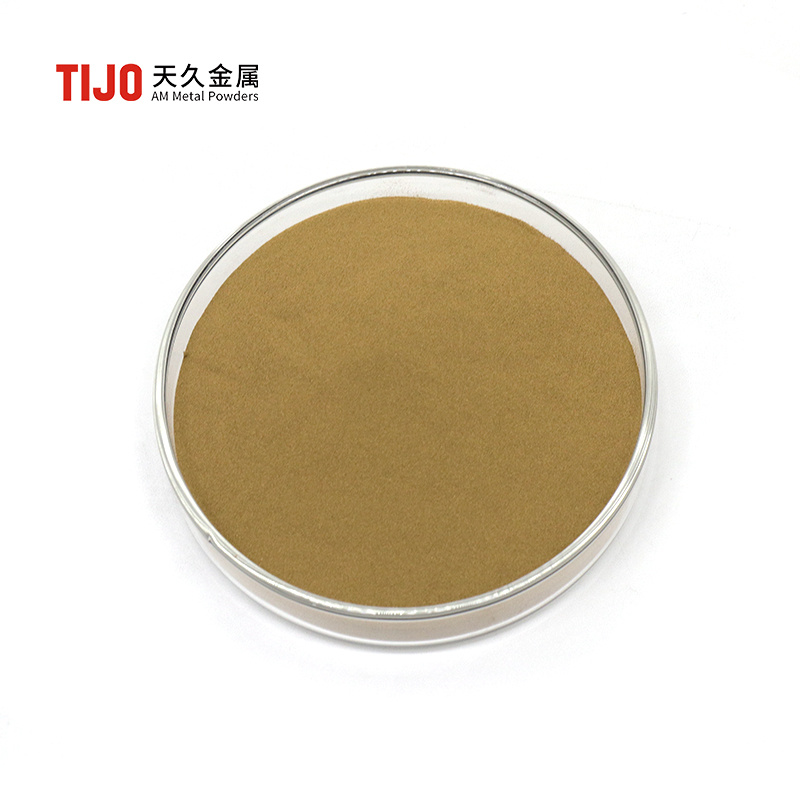
Excellent figurability and high strength, good weldability and machinability properties
View Details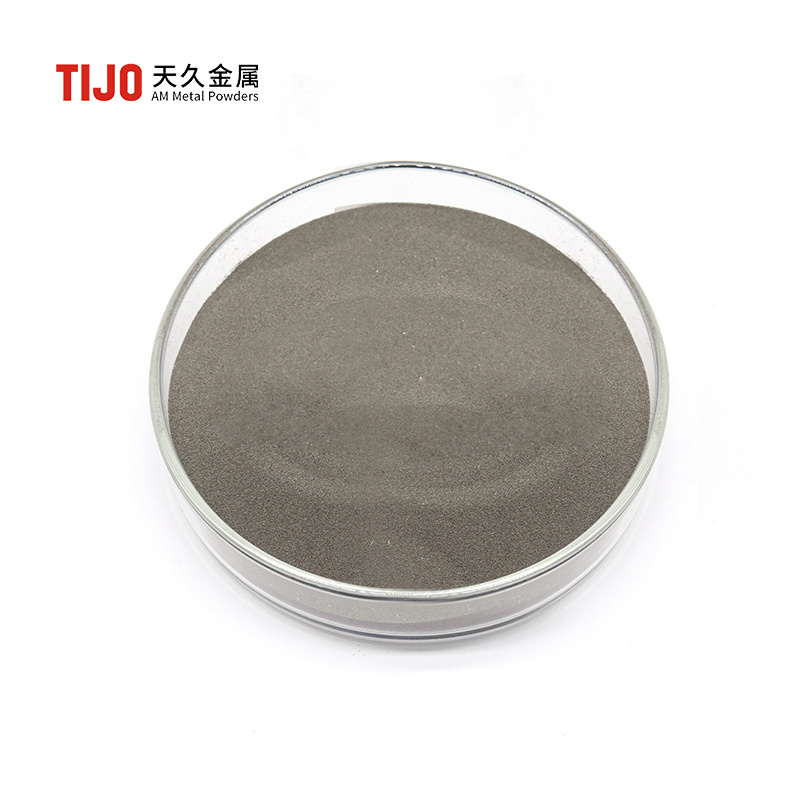
It has high-strength and high toughness as well as good high temperature properties and corrosion resistance and good welding performance that can fill the small gap connector, we suggest the joint gap is 0.025-0.075mm
View Details
Similar with the eutectic composition of copper phosphorus, low welding temperature, The flowability of solder is very excellent, suitable for small junction of solder gaps, and formed very small solder angle after solder
View DetailsMaybe you want to know something else.
Contact Us
Address: No.39, Liandong Yougu lnd. Park, Bachelor Street,Changsha City,Hunan Province, China.