
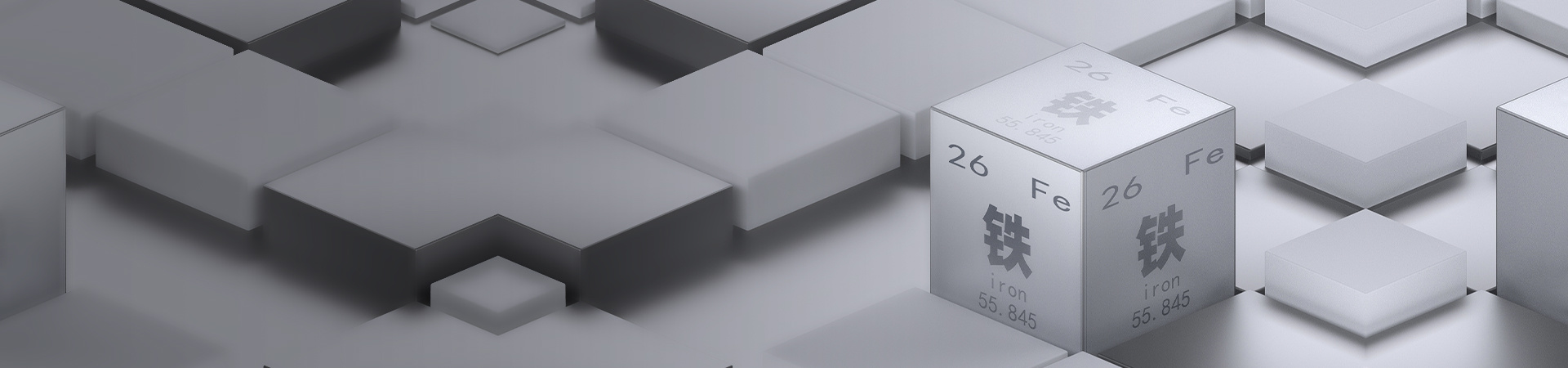
Iron-based
Iron-based powder is a raw material of alloy powder with iron as the main component, which is widely used in the fields of mechanical parts, 3C products, porous materials, tooling materials, magnetic materials, shielding materials, surface coatings, etc., and it is the raw material of powder metallurgy with a large dosage, and it has a high cost performance ratio.
1080 carbon steel powder · High-carbon steel powder
High hardness · Excellent wear resistance · Specifically for powder metallurgy, MIM, and 3D printing
Core Advantages of 1080 Carbon Steel Powder
High carbon, high hardness
With a carbon content of 0.75–0.88%, after quenching and low‑temperature tempering, the hardness reaches ≥60 HRC, and its wear resistance is significantly superior to that of low‑ and medium‑carbon steels.
Excellent formability
The powder exhibits excellent flowability (≤35 s/50 g) and a tapped density of ≥3.8 g/cm³, making it well-suited for automated compaction and 3D‑printing powder spreading.
Heat treatment compatibility
The hardness–toughness balance can be flexibly adjusted through quenching (800–830°C) and tempering (150–500°C).
Economical and practical
Its cost is lower than that of alloy steel powder, making it well suited for the mass production of standard parts, tool components, and wear-resistant components.
Product Real-Scene Photos & Microscopic Morphology
 SEM of 1080 carbon steel powder
Spherical or near-spherical particles with a narrow particle size distribution, concentrated in the 15–53 μm range.
 Real-life photos of the powder
Gray powder, packaged in vacuum‑sealed aluminum foil bags or iron drums, with batch traceability.
 Cutting tools/wear-resistant parts
Typical applications include blades, saw blades, bearings, gears, and more.
1080 Carbon Steel Powder: High-Hardness, Cost-Effective Iron-Based Powder
1080 carbon steel (AISI 1080) is a eutectoid high-carbon steel with a carbon content of 0.75–0.88%, offering excellent hardenability and wear resistance. The 1080 carbon steel powder produced by TIJO is manufactured using an atomization process in a vacuum environment, resulting in highly spherical particles, low oxygen content (≤0.10%), and excellent flowability. The product is primarily offered in particle sizes of 15–53 μm and 15–45 μm, making it particularly well-suited for selective laser melting (SLM), metal injection molding (MIM), and powder metallurgy compaction.
Chemical Composition (wt%, TIJO Internal Control)
| Element | C | Mn | Yes | P | S | Fe |
|---|---|---|---|---|---|---|
| Scope of the standard | 0.75-0.88 | 0.60-0.90 | ≤0.30 | ≤0.03 | ≤0.03 | Bal. |
| Typical measured values | 0.80-0.85 | 0.70-0.80 | ≤0.25 | ≤0.02 | ≤0.01 | Bal. |
* Oxygen content ≤ 0.10%, which can be further reduced by vacuum degassing. Carbon content can be finely adjusted to customer specifications (0.70–0.90%).
Key Particle Size Specifications & Physical Properties
| Particle size specification | D10 (μm) | D50 (μm) | D90 (μm) | Loose packing density (g/cm³) | Tap density (g/cm³) | Flowability (s/50g) | Recommended Process |
|---|---|---|---|---|---|---|---|
| 15–53 μm | ≥15 | 32-40 | ≤55 | ≥3.8 | ≥4.8 | ≤35 | SLM 3D printing, laser cladding |
| 15–45 μm | ≥14 | 28-35 | ≤48 | ≥3.9 | ≥4.9 | ≤34 | SLM precision printing, MIM injection molding |
* Flowability testing is conducted using a φ2.5 mm Hall flowmeter. Other particle sizes (e.g., 10–30 μm, 20–40 μm, 53–105 μm) can be customized upon request.
| Parameter item | Typical value | Note |
|---|---|---|
| Density (theoretical) | 7.85 g/cm³ | When the sintering/printing density is ≥98%, the density is approximately 7.7 g/cm³. |
| Sintering temperature (PM) | 1120–1180°C (in vacuum or hydrogen) | Keep warm for 60–90 minutes. |
| Quenching process | 800–830°C oil quenching/water quenching | Obtain a martensitic microstructure |
| Tempering process | 150-500°C | Tempering at 150–250°C yields a high hardness of 60–65 HRC, while high‑temperature tempering enhances toughness. |
| Thermal conductivity (25°C) | Approximately 50 W/(m·K) | Superior to stainless steel, with excellent heat dissipation. |
1080 Carbon Steel vs. 4140/4340 Alloy Steel Powder
| Performance Dimension | 1080 carbon steel | 4140/4340 alloy steel |
|---|---|---|
| Cost | ✓ Significantly lower | Higher (including Cr, Mo, Ni) |
| Quenching hardness | 60-65 HRC | 50-55 HRC |
| Wear resistance | ✓ Excellent (high-carbon martensite) | Good |
| Resilience | Medium | ✓ Higher (improved by alloying elements) |
| Application | Cutting tools, springs, wear-resistant parts | Gears, shafts, structural components |
1080 carbon steel excels in hardness and wear resistance, while offering a lower cost, making it well suited for applications that do not demand high toughness but require excellent wear resistance.
Process Recommendations and Typical Performance
| Craftsmanship | Recommended particle size | Hardness after heat treatment | Typical Applications |
|---|---|---|---|
| SLM 3D printing | 15–53 μm | ≥58 HRC | Blades, mold inserts, heat exchangers |
| Powder metallurgy pressing | -200 mesh/15–53 μm | ≥55 HRC | Gears, bearings, mechanical parts |
| MIM injection molding | 15–45 μm | ≥57 HRC | Precision tools, medical devices, springs |
Typical application areas
 Tool manufacturing
Blades, saw blades, stamping dies, milling cutters, drill bits
 Spring component
High-stress springs, mechanical reeds, automotive clutch diaphragms
 Wear-resistant components
Bearings, gears, guide rails, cams, liners
 Tool machining
Hand tools, wrenches, agricultural machinery parts, pliers
 Industrial parts
Shafts, pins, fasteners, valve cores
 Automotive parts
Brake discs, transmission components, and engine valve seats
End-to-end testing capability
Each batch of 1080 carbon steel powder is tested for chemical composition (C, Mn, Si, etc.), particle size distribution, oxygen content, flowability, and bulk/ tapped density. A Certificate of Analysis (COA) is provided.
Packaging & Delivery
Powder packaging
Vacuum-sealed in a double-layer aluminum foil pouch (to prevent oxidation), with an outer iron or plastic drum.
Specifications: 1 kg, 5 kg, 10 kg, 25 kg, 50 kg per drum
Export packaging
Export orders are packed in wooden crates or pallets and reinforced to protect against moisture and impact.
Compatible with sea freight, air freight, and international express delivery.
Delivery time
15–53 μm and 15–45 μm are regularly stocked; shipment within 2–5 days after order confirmation.
Customization lead time: 7–15 days
Batch Traceability
For each batch, a sample is retained, and the COA report is shipped with the goods.
Supports third-party testing (e.g., SGS)
Free sample
Provide samples for SLM/PM/MIM process validation.
Bulk supply upon quality confirmation.
Customized Services
Particle size is customizable.
The carbon content can be adjusted within the range of 0.70–0.90%.
Shipping documents
COA, MSDS, ingredient list, packing list
Meets export customs clearance requirements and customer in-plant inspection standards.
Technical Support
Provide one-on-one sales coaching.
Assist customers in resolving issues encountered during use.
Inquire Now for Free Samples
Fill out the form on the right or contact us directly; we will provide product samples, technical data sheets, and price quotes to help you quickly complete your additive manufacturing process validation.
Address: No.39, Liandong Yougu lnd. Park, Bachelor Street,Changsha City,Hunan Province, China.
Recommend products
Maybe you want to know something else.
Contact Us

Address: No.39, Liandong Yougu lnd. Park, Bachelor Street,Changsha City,Hunan Province, China.